• Published on

    Columbus Icons and Higher-Ed Leaders Unite to Launch Proprietary “Scholarship Stewardship” Initiative at 2026 LRVH Cotillion

    GAHANNA, OH — March 20, 2026 — In a bold move to bridge the gap between receiving financial aid and achieving a degree, the LRVH (Love, Respect, and Value Her) Cotillion & Youth Scholarship Initiative announces its annual celebration on April 25, 2026, from 1:30 PM to 4:00 PM at the Edison Venue (781 Science Blvd, Gahanna, OH 43230).

    While traditional scholarships often end at the point of disbursement, LRVH is introducing a pioneering, proprietary curriculum centered on "Scholarship Stewardship." This initiative addresses the critical "leaky bucket" phenomenon in higher education: the unintentional mismanagement of educational funds that can derail students in both urban and rural communities.

    “Getting into college is only half the battle; staying there requires a legacy mindset,” says Danielle Dallis Hairston, Founder of WJLM and LRVH. “We are teaching our ‘debs’ and ‘beaus’ that a scholarship is not just a deposit—it is a sacred seed. Our program ensures they have the specific tools to keep, Plant, and invest those assets so they don't just graduate; they build a foundation for generational wealth.”

    A Powerhouse Coalition for Economic Mobility
    The event features a "Who’s Who" of Columbus leadership, including Emmy-award-winning news icons and state policymakers. This collective of city legends is uniting to witness the launch of a financially protected pipeline from middle school to the region’s premier higher education institutions, including Central State University.

    The 2026 LRVH Strategy Highlights: The "Legacy Seed" Licensed Stewardship Model: A specialized, high-impact curriculum developed by Danielle Dallis Hairston and Sarah Wilkes. This proprietary model provides students and families with the sophisticated fiscal tools needed to defend their educational assets and protect investments from common external financial pressures.

    The $100,000 "Endowment Defense"
    Goal: A strategic fundraising cycle dedicated to scaling this unique financial-readiness framework for middle schoolers across the region.

    Keynote Insight: Prosecutor Shayla Favor will deliver a powerful address on the intersection of community leadership, personal accountability, and the "higher-ed-to-career" pipeline.

    Media Availability: Members of the press are invited for a dedicated interview window from 1:45 PM to 2:15 PM with participants, keynote speakers, and the founders to discuss why Scholarship Stewardship is the missing link in Central Ohio's education system.

    Supporters can invest in this movement at: https://givebutter.com/nUepKk

    About LRVH Cotillion
    The LRVH Cotillion (Love, Respect, and Value Her) is a premier youth initiative dedicated to the holistic development of middle school students through mentorship, financial stewardship, and community affirmation.

    Media Contact: Danielle Dallis Hairston (833) 395-3335 | events@womenjustlikeme.org

    NOTICE: The "Keep, Plant, Invest" curriculum and the LRVH Stewardship Model are the exclusive intellectual property of Danielle Dallis Hairston and Sarah Wilkes. All rights reserved © 2026. These materials are used by LRVH under an exclusive licensing agreement.
  • Published on

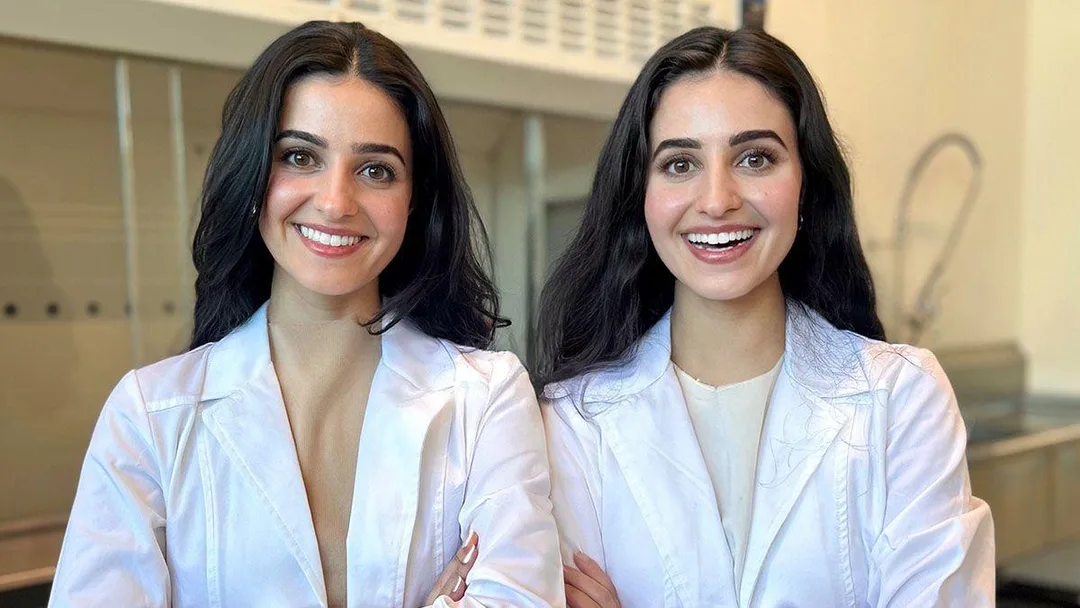
    Carbon-to-materials startup Rubi, founded by sisters Leila and Neeka Mashouf, secures $7.5 million in funding

    Picture
    TFN - Carbon-to-materials startup Rubi has secured $7.5 million in fresh funding, alongside multi-year offtake term sheets worth over $60 million with leading fashion brands and manufacturers. The round was co-led by AP Ventures and FH One Investments, with backing from Talis Capital, CMPC VenturesH&M GroupUnderstorey Ventures, and angel investors.

    This capital will help Rubi scale its production system to industrial demonstration, expand its product pipeline and enhance the performance and cost efficiency of its engineered enzymes.

    What specific market problem does Rubi address? 
    As disclosed by Neeka Mashouf, co-founder and CEO of Rubi to TFN, “Rubi’s modular manufacturing system addresses key industry issues today: supply chain resilience, production flexibility, and reduced capital requirements. Our approach enables production that is both more efficient and more flexible than conventional methods, achieving advanced tunability and performance in the end materials.” 

    Traditional methods for producing essential materials rely heavily on the degradation of natural resources, with industrial processes accounting for approximately 30% of global CO2 emissions. They require extensive deforestation, high water use, and energy-intensive processes, which are incompatible with urgent energy-efficiency needs. As a result, the textile industry, for example, is the third-largest CO2-polluting supply chain globally. Rubi’s technology was first deployed in the fashion industry, and we are now expanding its impact beyond textiles, partnering with major players in the CPG and aerospace industries.

    A new industrial model built by sisters 
    Founded in 2021 by Neeka Mashouf and Dr. Leila Mashouf in San Francisco, the company is working toward a future where essential materials are produced from abundant carbon rather than finite resources. 

    Rubi’s long-term ambition goes beyond replacing a single material. It is building a new manufacturing system designed for resilience and flexibility. Its modular production units require up to 10 times less capital expenditure than traditional infrastructure and can be deployed closer to where materials are needed. This opens the door to localised manufacturing, reduced transport dependency and more stable supply chains.

    The next phase focuses on reaching industrial demonstration scale, where Rubi will produce commercial quantities for customers across textiles and consumer goods formulations. As industries search for cleaner and more adaptable production methods, Rubi’s model offers a compelling alternative, one where manufacturing aligns more closely with both economic and environmental realities.

    Detailing their background, Neeka stated, “My sister and co-founder, Leila Mashouf, and I launched our scientific careers at 15, publishing research on artificial photosynthesis and conducting bioengineering work on cancer therapeutics. In 2021, we combined our expertise to tackle one of the industry’s greatest challenges: transforming manufacturing to work in harmony with nature rather than against it.”

    “Armed with a bold vision, we bootstrapped Rubi in a public biohacking lab, determined to prove that CO2 could become a valuable resource rather than a harmful waste product. That persistence attracted world-class investors like H&M Group and Patagonia, secured partnerships with leading global brands, and enabled us to build a team of experts at the intersection of enzyme technology, materials science, and low-waste manufacturing. As CEO, I was recently selected to speak at the World Economic Forum’s official program in Davos. Prior to that, I was recognised on the 2025 MIT 35 Under 35 list, and Leila and I were both named among just ten ‘Tomorrow Shapers 2025’ by the European Patent Office.”

    From climate problem to manufacturing input
    At the centre of Rubi’s approach is a simple but powerful shift, which is treating carbon dioxide not as waste, but as a raw material. Traditional manufacturing relies heavily on fossil fuels, complex supply chains and large, fixed infrastructure. Rubi flips that model by using a cell-free enzyme platform that converts CO₂ into essential materials such as cellulose-based polymers.

    Instead of fermentation or petrochemical processes, the system uses cascades of specialised enzymes to build complex materials step by step. The result is a process that is more flexible, efficient, and adaptable to different end uses.

    Machine learning-driven enzyme engineering further sharpens performance, enabling continuous improvements in cost and productivity without overhauling the entire system.

    When asked about the motivation of this idea, Neeka stated, “We founded Rubi to address a fundamental gap in how industries manufacture essential materials. Conventional processes demand massive fixed infrastructure, create supply chain fragility, and rely on extractive raw materials—all of which represent serious structural problems for industries like fashion, CPG, and aerospace.” 

    “We also recognised that waste carbon was an abundant, largely untapped resource, and that existing production methods, whether traditional fermentation or chemical processes, were too inflexible and capital-intensive to meet the demands of modern, resilient supply chains. Rubi was built to solve that: a modular system offering 10x cheaper CapEx needs that can be deployed at the point of need, anywhere in the world, transforming waste carbon into high-performance materials. The market need was clear, and the commercial traction we’ve seen (15 partners and over $60M in offtake agreements) confirms that demand is real, she added.”

    How is technology different from others?
    Rubi’s proprietary technology uses a cascade of specialised enzymes to transform simple 1-carbon molecules into complex carbohydrate polymers like cellulose under mild conditions. While conventional manufacturing demands massive fixed infrastructure, Rubi’s platform can be deployed in modular units anywhere, enabling critical supply chains to be established at the point of need at a fraction of typical infrastructure development costs. AI- and ML-based enzyme engineering complements the platform, continually advancing enzyme performance and yielding immediate gains in cost and productivity. 

    This contrasts with most alternative production methods, such as fermentation and chemical catalysis systems, which face adoption challenges due to high costs and capital requirements—making them impractical for widespread industrial use. That’s why Rubi’s technology uses cascades of specialised enzymes to transform abundant carbon molecules like CO2 into complex materials, enabling production that is both more efficient and more flexible, with the ability to be on-shored from anywhere.

    Detailing about competition, Neeka stated, “While other companies have attempted to utilise CO2 for materials production, Rubi’s cell-free enzymatic process stands apart in its ability to maintain commercial viability.

    LanzaTech, for example, uses biological systems to process CO2, but requires significant infrastructure investment and high upfront energy costs, resulting in lower conversion yields. And while companies like Twelve and Fairbrics focus on synthetic polyester production, their energy-intensive processes are constrained by high capital expenditure and substantial operating costs.”

    Real demand across fashion, retail and beyond
    Rubi’s progress is not limited to the lab. Over the past year, the company has built strong commercial momentum. In 2025, it signed offtake agreements worth over $60 million, expanded partnerships from seven to 15, and completed fibre performance testing with multiple collaborators. Existing partners include major names like Walmart and Reformation.

    The company has also moved into new pilot programmes across consumer packaged goods and aerospace, signalling that its materials platform has applications far beyond textiles. 

    At the same time, Rubi has gained broader recognition. It was named to the Norrsken Impact/100, while co-founder and CEO Neeka Mashouf earned a place on the MIT 35 Under 35 and spoke at the World Economic Forum in Davos. The company also strengthened its scientific bench, bringing in experts in biocatalysis and enzyme engineering, including Dr. Michael Jewett, Dr. Richard Fox and Dr. Alex Patist.

    What’s ahead for Rubi?
    Regarding the plans for the next five years, the co-founder explained, “In the next five years, we aim to advance to an industrial demonstration-scale system and operate full-scale production facilities with multiple global partners. We’ve already more than doubled our commercial partnerships from seven to 15 in 2025, focusing on scaling our production system to meet the multi-year offtake term sheets worth over $60M we’ve secured with leading fashion brands and manufacturers. Beyond textiles, Rubi has launched new pilots with major partners in the CPG and aerospace industries, with the broader goal of creating an entirely new market category: products derived from carbon waste, produced modularly and affordably, on-shored wherever they’re needed.”

    “We started Rubi with the vision that cell-free, multi-enzyme pathways would unlock efficient, scalable, high-performance manufacturing for critical materials from CO2,” said Neeka Mashouf, Co-Founder and CEO of Rubi. “We’ve now demonstrated this technology scales effectively and meets or exceeds customer product standards, driving an inflection point of commercialization. The fresh funding will accelerate our scaling and growth to meet strong global demand for modular and affordable manufacturing of essential materials from waste carbon across textile, CPG, aerospace, and chemicals verticals.”

    “Rubi has reached an important transition point, with its technology now demonstrated at pilot scale and clear demand emerging across multiple end markets,” said Kevin Eggers, Partner at AP Ventures. “The team has made strong progress translating a differentiated scientific platform into early commercial traction. We’re pleased to support Rubi as it moves into industrial demonstration and the next phase of scaling.”

    source [Tech Funding News]
  • Published on

    Parallel, launched by Paul Lafforgue and Chris Rydahl, Raises $20M in Series A Funding

    Picture
    Parallel, a Paris, France-based startup building AI agents for hospitals, raised $20m in Series A funding.

    The round was led by Index Ventures, with participation from Frst, YC, Hexa, and notable angels including Arthur Mensch (Mistral), Felix Blossier, and Quentin de Metz (Pennylane).

    The company intends to use the funds to accelerate the rollout of its existing coding agents, expand internationally, develop new solutions to automate time-intensive hospital processes, and to expand its team.

    Launched in 2025 by Paul Lafforgue and Chris Rydahl, Parallel is a software solution that builds AI agents to automate administrative tasks in hospitals. Using Large Language Models and Computer Use Agents, Parallel leverages medical data to streamline operations and improve the quality of care.

    The company’s first focus is medical coding, a core hospital workflow that converts clinical information from a patient stay into standardized codes used for reimbursement and reporting.

    Less than one year after its $3.5M seed round, Parallel’s AI agents have already been deployed across several dozen public and private hospitals, running on top of existing systems to automate administrative work.

    source[FinSMEs]
  • Published on

    Navigara, Founded by Jirka Bachel, raises $2.5M in Seed Funding led by Inovo VC

    Picture
    source[FinSMEs]: Navigara, a San Francisco, CA-based developer of an engineering performance measurement layer, raised $2.5M in seed funding.

    ​The round was led by Inovo VC, with participation from Rockaway Ventures and QQ Capital.

    The company intends to use the funds to scale its AI-driven performance analysis platform, expand its global presence, and strengthen its mission to provide CTOs with objective data on engineering ROI and AI tool impact.

    Led by Founder and CEO Jirka Bachel, Navigara is advancing a platform that connects to development tools like GitHub, GitLab, Jira, and Linear to translate raw activity into strategic signals. The system uses agentic analysis to evaluate code commits for intent and impact, helping leaders distinguish between genuine productivity gains and “AI noise” or structural waste.

    The company prioritizes data sovereignty by deploying within customers’ private cloud environments with read-only access and zero code retention, making it suitable for high-compliance enterprise settings.

    The company also has engineering operations in Prague.

    source[FinSMEs]
  • Published on

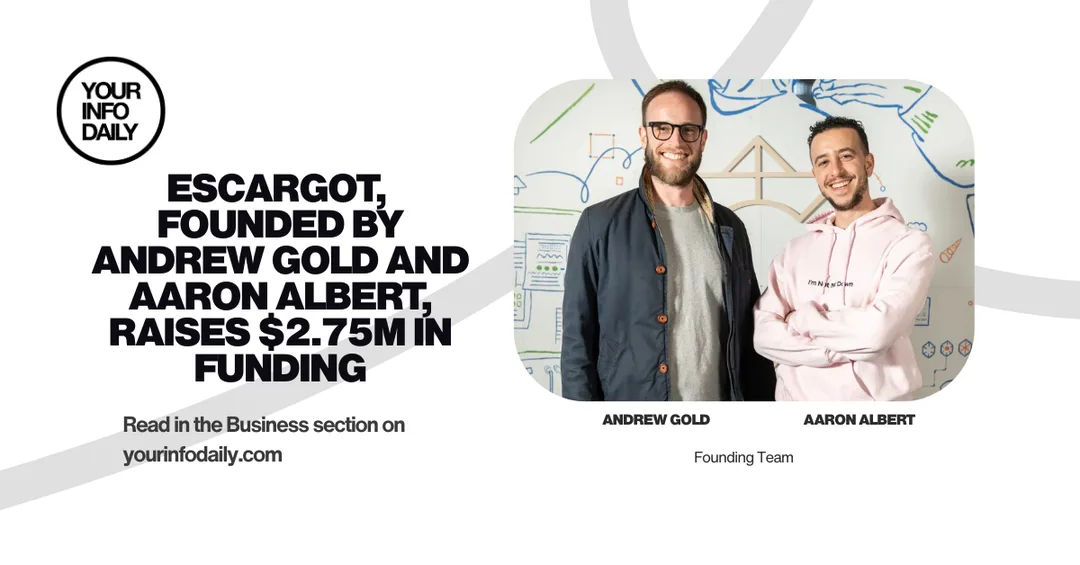
    Escargot, founded by Andrew Gold and Aaron Albert, Raises $2.75M in Funding

    Picture
    Escargot, a NYC-based developer of an AI-powered greeting card mobile app, raised $2.75m in funding. 

    The round was co-led by Wischoff Ventures and Hannah Grey Ventures, with participation from South Park Commons and Magic Fund. 

    The company intends to use the funds to advance its AI-driven card creation features and scale its physical card delivery infrastructure. 

    Led by Andrew Gold and Aaron Albert, Escargot provides an app that enables users to design and mail physical greeting cards for any occasion — birthdays, holidays, congratulations. The platform leverages AI to remix artistic styles and analyzes user calendars and contacts to proactively suggest specific occasions for sending personalized correspondence. 

    The startup has already established a presence in the mobile gifting market.

    sorce[FinSMEs]
  • Published on

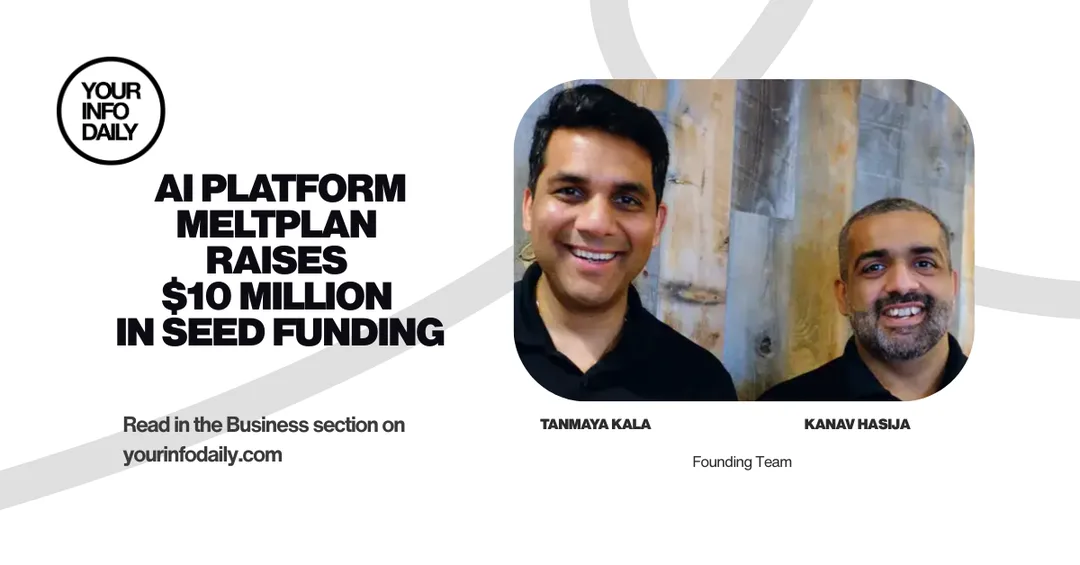
    AI platform MeltPlan raises $10 million in Seed funding

    Picture
    [CONSTRUCTION OWNERS]MeltPlan, an AI-native pre-construction AI platform founded in 2025, today announced its $10 Mn Seed funding led by Bessemer Venture Partners, with participation from noa. This brings the total funds raised by the company to $14 Mn.

    The new capital will be used to advance MeltPlan’s “planning engine” for the $14 Tn construction industry, an AI system purpose-built to optimize critical decisions before construction begins. The funding will accelerate MeltPlan’s product development across code, cost, schedule, and value decision systems.

    ​While design software optimizes use and aesthetics, and construction software optimizes execution and control, MeltPlan is building the missing layer: software that optimizes decisions and trade-offs upstream, before scope is locked, procurement begins, and change orders become inevitable.

    “Construction doesn’t fail because teams are not skilled or execute poorly,” said Kanav Hasija, Co-founder and CEO of MeltPlan. “It fails because preconstruction teams are fragmented and commit too early with incomplete information. We’re building an AI system that allows teams to evaluate constraints, run scenarios, and align before plans are frozen.”Hasija previously co-founded Innovaccer, a $3 billion healthcare technology company, Innovaccer, to make healthcare in the US more affordable and accessible.

    ​At Innovaccer, he architected the proprietary Data Activation Platform, widely regarded as the first full-stack data platform purpose-built for value-based healthcare. By bringing structure, intelligence, and interoperability to one of the world’s most complex and regulated industries, Hasija helped health systems move from fragmented data to coordinated, value-based care.

    Drawing from that experience, he is now applying the same systems thinking to construction, an industry facing similar challenges of silos, irreversible decisions, regulatory complexity, and massive financial risk. He is joined by Tanmaya Kala, Co-founder and COO, a Stanford-educated civil engineer who was project executive at DPR Construction, handling large commercial, healthcare, and life science projects.

    MeltPlan’s long-term goal is to help teams make construction “boring” by making planning more intense: surfacing constraints and tradeoffs early, aligning stakeholders before plans are frozen, and reducing the need for late-stage redlines, rework, and change orders. “Construction should be boring,” said Hasija. “Planning should be intense. If your construction phase is stressful, something went wrong earlier.”

    “Built environment workflows are full of irreversible decisions made under uncertainty,” said Pankaj Mitra, Partner at Bessemer Venture Partners. “MeltPlan is approaching preconstruction as a system, not a phase, building a visionary ‘planning engine’ layer that helps teams quantify tradeoffs early and reduce downstream volatility.”

    MeltPlan is working with top enterprise contractors like DPR Construction in California and Innovo Group in UAE to help in their planning or preconstruction phase of construction.

    An AI system designed for construction, not adapted to ItUnlike general-purpose AI tools adapted for construction, MeltPlan is building a construction-native AI system that is designed to understand building codes, materials, sequencing, procurement, and construction methods. The system has already scored 95% or higher on building inspector exams, and the company is working to expand its expertise across all trades and disciplines in construction planning.
    The Planning Engine will have four integrated systems:
    • Code System: Context-aware compliance pathways for architects, engineers, and inspectors
    • Cost System: Risk-oriented takeoffs / quantity survey, bid scoping, and leveling for general contractor and trade contractor preconstruction teams
    • Schedule System: Scenario-based sequencing and what-if planning before scope freeze
    • Value System: Value impact analysis and optimization recommendations for owners and developers

    Rather than digitizing existing workflows, MeltPlan aims to help teams simulate outcomes before committing to them.

    “Preconstruction is treated like a phase,” Kala said. “But it’s actually the operating system of the project. When decisions evolve upstream, execution downstream becomes boring - and that’s a good thing.”

    “As responsible contractors, we always believe in investing more time in preconstruction,” said Atul Khanzode, DPR Construction Leadership Team Member. “We are excited to partner with MeltPlan to help us reduce planning errors while speeding up the preconstruction process”.

    source[CONSTRUCTION OWNERS]