• Published on

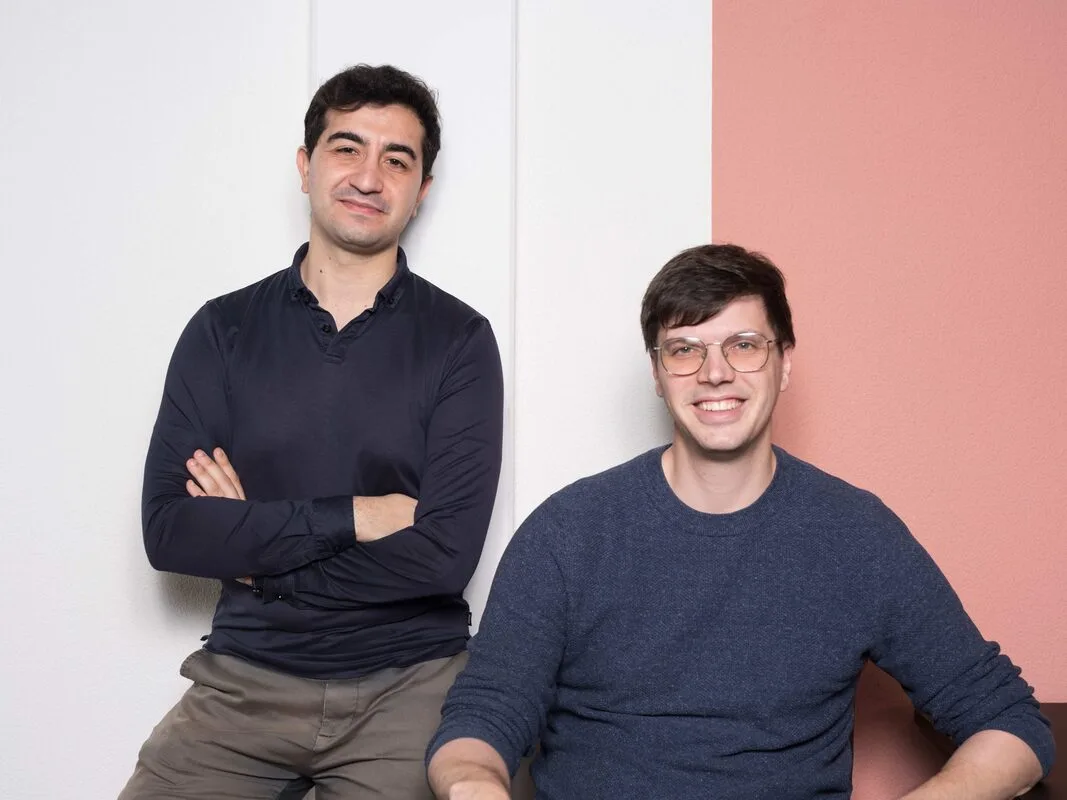
    Soverli, cofounded by Ivan Puddu and Moritz Schneider, Raises $2.6M in Pre-Seed Funding led by Founderful

    Picture
    Soverli, a Zurich, Switzerland-based cybersecurity company, raised USD 2.6m in pre-seed funding.

    ​The pre-seed round was led by Founderful, with participation from the ETH Zurich Foundation, Venture Kick, and other figures in cybersecurity. 

    The company intends to use the funds to grow its engineering team, bring its techonology to more smartphone models, strengthen integrations with mobile device management systems, and scale partnerships with OEMs.

    Led by Ivan Puddu (CEO) and Moritz Schneider (CTO), Soverli is a cybersecurity company providing a patent-pending platform that packs multiple fully isolated phones into one device. By enabling independent operating systems to run in parallel on the same smartphone alongside Android and iOS, Soverli helps enterprises, governments, financial institutions, and every consumer combine security, user freedom, and modern app ecosystems.

    Developed over more than four years of research at ETH Zurich, its patent-pending methodology enables multiple operating systems (OS) to run in isolation – simultaneously – on a single device. This turns every commercial phone into sovereign infrastructure.

    The first application is built for mission-critical communication. Long term, the company aims to set a new standard for how software is layered on phones, making true digital sovereignty available to everyone on every commercial smartphone.

    source;[FinSMEs]

  • Published on

    AIR: $6.1 Million Seed Funding Closed To Bring Daily AI Credit Ratings To Private Credit And Public Markets

    By Amit Chowdhry with Pulse 2.0

    AIR Platforms has raised a $6.1 million seed round, co-led by Work-Bench Ventures and Lerer Hippeau, as it builds an AI-powered credit intelligence platform to deliver continuous, bias-free credit ratings for both public and private companies. The New York-based company said its goal is to replace legacy credit ratings systems with autonomous, daily evaluations of corporate financial health.

    AIR said it was built by industry veterans with backgrounds at Moody’s, DataRobot, Goldman Sachs, and Morgan Stanley. The company is targeting a market where private credit has grown to more than $2 trillion globally, and where risk assessment often relies on methodologies that are inherently periodic, subjective, and slow to adjust to new information.

    The company said manual workflows and backward-looking frameworks can constrain traditional credit rating approaches, while quantitative models can become stale quickly after deployment. AIR said its platform uses advanced AI trained on decades of financial and alternative data to detect early warning signals and update ratings in real time, giving banks, asset managers, and investors a more transparent view of risk across portfolios that increasingly include private assets.

    AIR pointed to a recent example it says demonstrates the platform’s practical value. When First Brands, an auto parts manufacturer, defaulted in September, AIR said one of its customers had already been alerted to credit deterioration. The company said it independently assigned a rating aligned with the lower end of speculative grade, comparable to a range between CCC and CC, before broader market recognition.

    AIR said it is gaining traction with financial institutions managing more than $4 trillion in assets, including CLO managers, BDCs, banks, and pension funds. The company also said Fortune 500 enterprises, including regulatory bodies, are using its tools for early warning, sensitivity analysis, portfolio stress testing, compliance support, and modernization of internal credit infrastructure.

    With the seed financing, AIR said it will continue investing in product development, talent, and strategic partnerships as it works to reshape how credit risk is measured and communicated in markets where private credit exposure is increasing and real-time monitoring is becoming more critical.

    KEY QUOTES:
    “Legacy credit rating approaches rely on manual methodologies that are slow and reactive, while quantitative models often become outdated the moment they go into production. You compound this with bias embedded in almost every framework, and you have the same conditions that led to the financial crisis, with flawed ratings, poor underwriting, and systemic blind spots. We built AIR to supercharge an analyst’s ability to not miss anything, the equivalent of an Iron Man suit that is always on, adaptive, and constantly learning. What we have developed is an intelligent framework that keeps getting better with every signal, allowing institutions to detect and understand credit risk in real time, not months later.”

    Glenn Carvajal, Co-Founder and CEO, AIR
    “From the beginning, we believed this team had what it takes to change an industry. They were on the front lines during the financial crisis, working within major financial institutions and ratings agencies that saw firsthand the challenges and breakdowns in credit assessment. They understand the root causes of credit failure and are proven experts in building real AI, not science projects, having helped scale a leading AI unicorn. The traction the AIR team is experiencing from leading financial institution customers has been extraordinary, and what they have accomplished since founding AIR is nothing short of unprecedented.”

    Jonathan Lehr, Co-Founder and General Partner, Work-Bench Ventures
    “AIR is tackling one of the most entrenched and least modernized corners of financial infrastructure. The existing credit rating system was built for another era, one where information moved slowly and opinions carried more weight than data. AIR flips that model on its head and gives credit and risk teams superpowers: continuous ratings, full transparency, and the ability to act before anyone else. It’s a complete rethinking of how institutional risk is measured, managed, and communicated. We’re thrilled to be co-leading this round and backing a team that’s redefining the future of credit.”

    Andrea Hippeau, Partner, Lerer Hippeau

    source[Pulse2.0]
  • Published on

    Subsense, co-founded by Tetiana Aleksandrova, Raises Additional $10M in Funding

    Subsense, a Palo Alto, CA-based developer of non-surgical invasive, nanoparticle-based brain-computer interfaces (BCIs), added $10m in funding. 

    The investment, which brought total funding to $27m, came from Golden Falcon Capital. 

    The company intends to use the funds to accelerate research and development in nanoparticle sensing, in vivo biosafety programs, next-generation nanoparticle design, and hardware miniaturization.

    Led by Tetiana Aleksandrova, Co-founder and CEO, Subsense is a neurotechnology company developing a non-surgical, nanoparticle-based bidirectional brain-computer interface. The bidirectional BCI platform is designed to record and modulate brain activity without surgical implants. Its technology pairs engineered nanoparticles, administered nasally to cross the blood-brain barrier, with proprietary hardware and signal-processing software.

    Together, these systems aim to achieve higher temporal and spatial resolution of reading and stimulation than current solutions, while also avoiding the risks and costs associated with surgically invasive electrodes or “brain chips.”

    Subsense recently opened a laboratory and engineering facility in Palo Alto, California, in addition to its research collaborations across North America and Europe. Its technology portfolio spans nanoparticle chemistry, magnetic signal transduction, and proprietary neural decoding algorithms aimed at safe, reversible, and high-fidelity brain data capture. 

    source[FinSMEs]
  • Published on

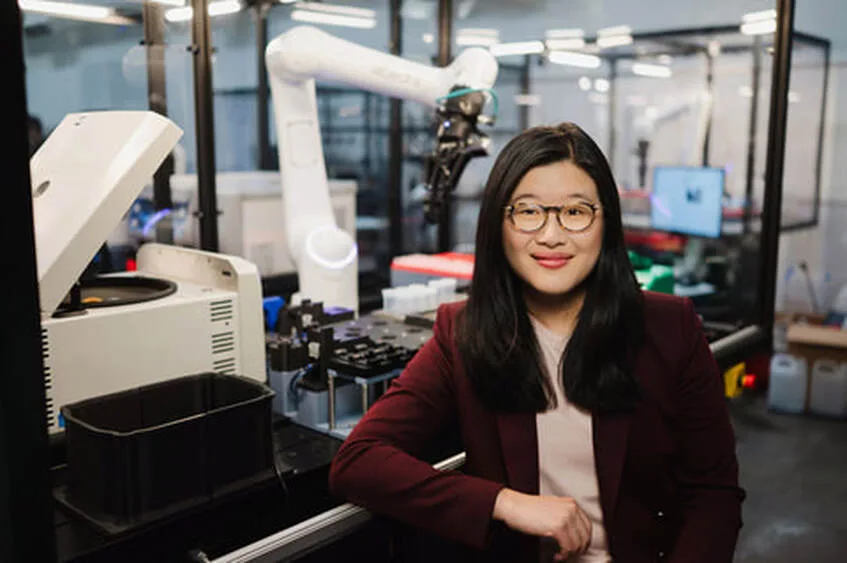
    Medra, founded by Michelle Lee, raises $52 Million Series A to Build Physical AI Scientists

    Picture
    Michelle Lee, Ph.D., Founder & CEO, Medra

    Pioneering the next era of discovery by integrating AI algorithms with robotics execution to reinvent how new medicines are designed.


    SAN FRANCISCO--Medra, the company developing the first platform for Physical AI Scientists, today announced a $52 million Series A financing led by Human Capital, with participation from existing investors Lux Capital, Neo, and NFDG, alongside new investors Catalio Capital Management, Menlo Ventures, 776, Fusion Fund, and others.

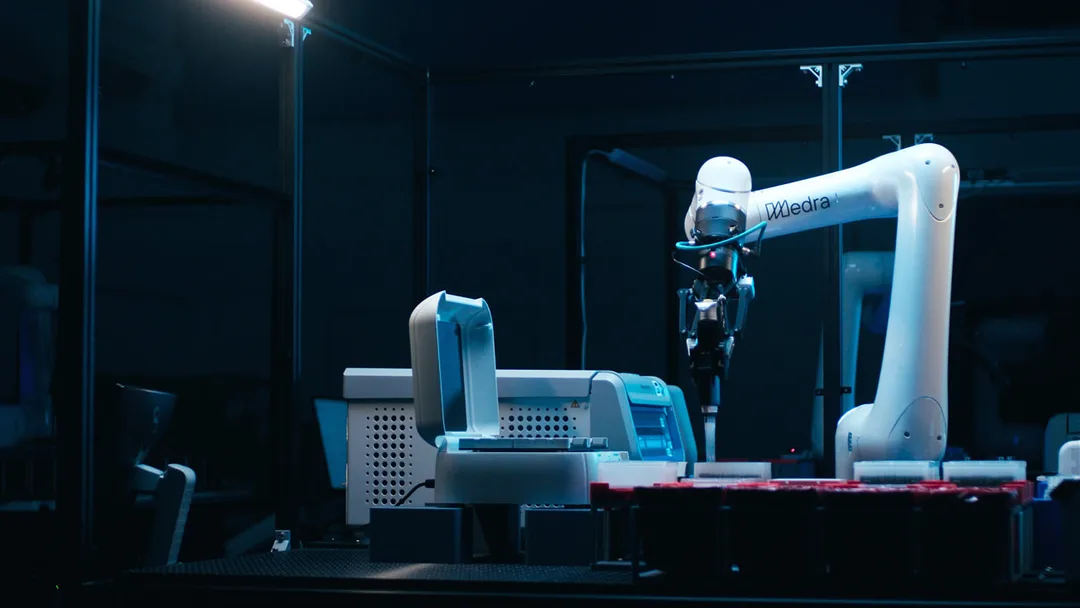
    Medra’s Physical AI autonomously runs experiments end-to-end, interfacing with standard laboratory tools and instruments and allowing scientists to adapt workflows through natural-language instructions. Its companion system, Medra’s Scientific AI, interprets results and co-pilots protocol improvements to enhance experimental outcomes and create a continuous learning engine.

    “Pharma runs millions of experiments, but most of that data can’t be reused or fed back into AI. We’re closing that loop by tying predictions to outcomes in a continuous, self-improving cycle,” said Michelle Lee, Ph.D., CEO & Founder, Medra. “To accelerate drug development, we need to link predictions directly to automated execution and feed the results back into the model. This continuous loop enables drug discovery companies to run far more experiments, iterate faster, and advance therapies with a higher probability of success.”

    Current AI lab alternatives tend to fall at one end of the spectrum, offering either traditional industrial automation without meaningful machine learning or AI-driven software without any robotic execution. Bringing a new medicine to market still takes 10-15 years and over $2B because discovery and preclinical work are slow, manual, and fragmented.
    Picture
    Pharma has tried to fix this with partial lab automation that remains brittle, inflexible, and dependent on scientist intervention, while separately building ML programs that still require manual, time-consuming experiments to generate data. None of these efforts operate in a closed feedback loop, leaving experimentation, data generation, and model improvement disconnected. Medra solves this by unifying robotics, AI, and data generation into a continuous system.

    “Medra is creating an entirely new category in biopharma R&D, one where we believe science can continuously learn and scale to create groundbreaking therapeutics with a higher chance of clinical success,” said Armaan Ali, Co-founder, CEO & Managing Partner, Human Capital.

    Patrick Hsu, Assistant Professor at UC Berkeley and co-founder of the Arc Institute, added: “AI models are generating predictions far faster than we can validate them experimentally. Integrating these tools with traditional lab automation is often too rigid to scale effectively. Medra’s Physical AI Scientist bridges this gap using autonomous, general-purpose robotics. The system learns from every experiment, creating the continuous feedback loop needed to scale data generation and drive breakthroughs in frontier science.”
    During JPM Week (January 12–16, 2026), Medra will host private tours of its San Francisco facility. For more information, contact tours@medra.ai.

    About Medra
    Medra is building the world’s first end-to-end Physical AI Scientist platform for continuous experimentation. By combining AI-driven scientific reasoning, robotic execution, and real-time optimization, Medra enables a new paradigm for drug discovery, one that continuously learns, scales, and predicts therapeutic success across every stage of development. The company is headquartered in San Francisco, CA. For more information, visit www.medra.ai.


    Contacts
    Media Contact
    Kimberly Ha
    KKH Advisors
    917-291-5744
    kimberly.ha@kkhadvisors.com

    source{BusinessWire]
  • Published on

    Kilo Code, co-founded by Scott Breitenother and Sid Sijbrandij,  Raises $8M in Seed Funding

    Picture
    Kilo Code, a San Francisco, CA-based open source coding agent services provider, raised $8M in Seed funding.

    ​The round was led by Cota Capital with participation from Breakers, General Catalyst, Quiet Capital, and Tokyo Black.
    The company intends to use the funds to expand operations and its development efforts.

    Co-founded by Scott Breitenother, founder of Brooklyn Data, and Sid Sijbrandij, Kilo is the all-in-one, agentic platform for software developers. Kilo’s mission is to bring Kilo Speed to agentic engineering. Engineers ship faster when their tools work with them, not against them.

    source[FinSMEs]
  • Published on

    Empromptu, founded by Shanea Levin, has raised an oversubscribed $2M pre-seed round

    by Shanea Levin

    I'm excited to share that Empromptu has raised an oversubscribed $2M pre-seed round led by Precursor Ventures, with participation from Alumni Ventures, FoundersEdge, Rogue Women's Fund, South Loop Ventures, Zeal Capital Partners, and angel investor Edith Harbaugh.

    Today, we're launching Self-Managing Context—AI that manages, trains, and improves itself in production.

    Here's the brutal truth: 95% of AI features die in staging.

    Because the AI builders everyone's using don't work for production.

    Your investors want AI. Your customers want AI. Your team is maxed out. You can't rewrite your platform. You can't double headcount.

    That ends TODAY.

    Self-Managing Context means AI features that:
    Handle 100GB+ worth of files without losing context, and even more for enterprise accounts
    Learn from real usage and improve themselves
    Maintain 98% accuracy in production
    Integrate into your existing codebase

    No rewrite. No new hires. No prototype hell.

    We're trusted by 2,000+ businesses already.

    One healthcare founder used Empromptu to add AI-powered CRM and prevent customer churn—without hiring a single engineer.

    Static SaaS is dying. Not because it failed, but because it stopped evolving.

    In 10 years, every SaaS company will be AI-Native or dead.

    The companies moving now will own their markets. The ones waiting will be explaining to their board why they're losing to competitors who moved faster.

    We're not killing SaaS. We're evolving it.

    Join me live at 5:00 pm PT today.

    I'll show you exactly how Self-Managing Context works and answer your toughest questions.

    Sign up: empromptu.ai