• Published on

    Here’s how you’re going to get famous on LinkedIn before Christmas.

    by Kasey Brown

    We’re about to get into it today.

    No fluff.

    No “post 3x a week and hope for the best.”

    Just what actually works.

    1. Start with money, not content.

    Most people ask. “What should I post about?” Wrong question.

    Ask this: “How am I trying to make money?”
    Once you know that, reverse-engineer your ICP.

    Once you know your ICP, you know what content matters.

    Your content strategy should lead to revenue. Not just engagement.

    ——--

    2. Solve the hidden problem.

    The problem everyone’s talking about? That’s not your angle.

    The hidden problem—the thing your ICP doesn’t even know they have yet—that’s where you win.

    You don’t have to be better.

    You HAVE to be different.

    And different comes from naming what nobody else will say.

    ——--

    3. Everything serves one transformation.

    Every post moves your ICP from their hidden problem to their desired state.

    That’s it. That’s the filter.

    You’ve got 4 content types:
    → Personal stories (your journey)
    → Other people’s stories (clients, case studies, celebrities)
    → Frameworks (teaching posts like this)
    → Client results (proof it works)

    Mix them up. But they all serve the same transformation.

    ——--

    4. Post 4x a week minimum.

    Between now and Christmas, you need to show up.

    Not because “consistency” is some guru mantra.

    Because your ICP needs to see you enough times to remember you exist.

    But here’s the key: only commit to what you can actually sustain.

    You can only be consistent if you enjoy what you’re creating.

    Optimize for joy, not obligation.

    ——--

    5. Connect with 20 people per day.

    To help. Not to pitch.

    Send thoughtful messages.

    Engage with their content.

    Be genuinely useful.

    Givers receive 10x more than takers.

    Your content is giving.

    Your outreach is giving.

    Stay in that mode and watch what happens.

    ——--

    6. Build one lead magnet by week 2.

    One guide or resource that solves your ICP’s hidden problem.

    This does two things:
    First, it changes how they see you. When you help for free, your brand becomes magnetic.

    Second, it gets them on your email list so you can nurture them outside LinkedIn’s algorithm.

    One good lead magnet > 100 mediocre posts.

    ——--

    7. Stop overthinking.

    The post that scares you? That’s the one.

    The story that feels too personal? That’s the one.

    The framework you think is “too simple”? That’s the one.

    Perfect doesn’t get traction.

    Honest does.


    ——--

    That’s it.

    Six weeks until Christmas.

    You don’t need a complicated strategy.

    You need clarity on who you’re serving, what problem you’re solving, and the discipline to show up.

    If you want help actually doing this—not just thinking about it—Cohort 3 of Brick by Brick opens December 15th.

    12 weeks. Daily accountability. Building the best of the best.
  • Published on

    Vine Revisited - A Return to the Halcyon Days of the Internet

    With a grant funded by Jack Dorsey, Rabble has created a new social video app - diVine - an open source revival of Vine videos and its six-second video creation capabilities

    ​Web Summit Lisbon, November 13, 2024Today, Rabble, one of Twitter's first employees and the person who hired Jack Dorsey, has launched diVine, an open-source social video app built on the Nostr protocol. The project, currently in beta mode, is funded by Dorsey through his non-profit "And Other Stuff." diVine revives the short-form video format popularized by Vine, which Dorsey shut down in early 2017 during his tenure as Twitter's CEO. The new video app reimagines the concept as a decentralized, open-source alternative.

    Bringing Back Beloved Vine Content & Giving Creators Owner Rights
    diVine provides access to over 100,000 archived Vine videos from the Internet Archive, which until now have been inaccessible, and allows users to make their own six-second videos and follow creators they love. Original Vine creators will also be able to reclaim ownership of their content, add new content, and, if they wish, request their content and account be removed as long as their accounts had been previously verified in Twitter.

    Taking A Stand Against AI Slop
    With AI-produced content fast becoming indistinguishable from regular content, AI slop has been flooding centralized mainstream social media platforms with requirements to tag AI content being largely ignored or enforced. diVine, which flags suspected GenAI content and prevents it from being posted, has been designed to bring back the days of 'real content made by real people'.

    Ad-based Algorithms Aren't the Only Approach
    "Social media is social first: it's about people and human connection. Vine represented an era of authentic human expression in six-second looping videos. Big tech companies want to remove the people and make all AI-generated social media apps where users are passive consumers of the algorithmic feed," says Rabble.

    "I want to show people that we don't need to settle for this dystopia. The new diVine app is built on open source permissionless open protocols, and reflects the rights I outlined in my call for a new social media Bill of Rights. With apps like diVine we can see the alternative. It's possible to enable creators to publish engaging content, without needing to game an ad algorithm which promotes toxicity and thrives on conflict," said Rabble. "They should also have full ownership of their content, and the right to remove it if they so desire, along with the ability to be compensated for their creativity."

    The Nostr protocol works just like internet or email protocols where the user chooses their web browser, or email service provider, and regardless of their choice, can still access all of their contacts and their content.

    "Nostr - the underlying open source protocol being used by diVine - is empowering developers to create a new generation of apps without the need for VC-backing, toxic business models or huge teams of engineers," says Jack Dorsey. "The reason I funded the non-profit, and Other Stuff, is to allow creative engineers like Rabble to show what's possible in this new world, by using permissionless protocols which can't be shut down based on the whim of a corporate owner."

    diVine is open to a limited number of users for beta testing at divine.video/open-source.

    For more information:
    Alice@flockmktg.com
    +1 415 740 8174

    [source]
  • Published on

    Sweet Security Raises $75M Series B and Unveils the First Unified Runtime CNAPP for Cloud and AI Security

    Picture
    6x ARR growth and 10x enterprise customer expansion position Sweet for market dominance as global demand surges for real-time protection across Cloud and AI environments

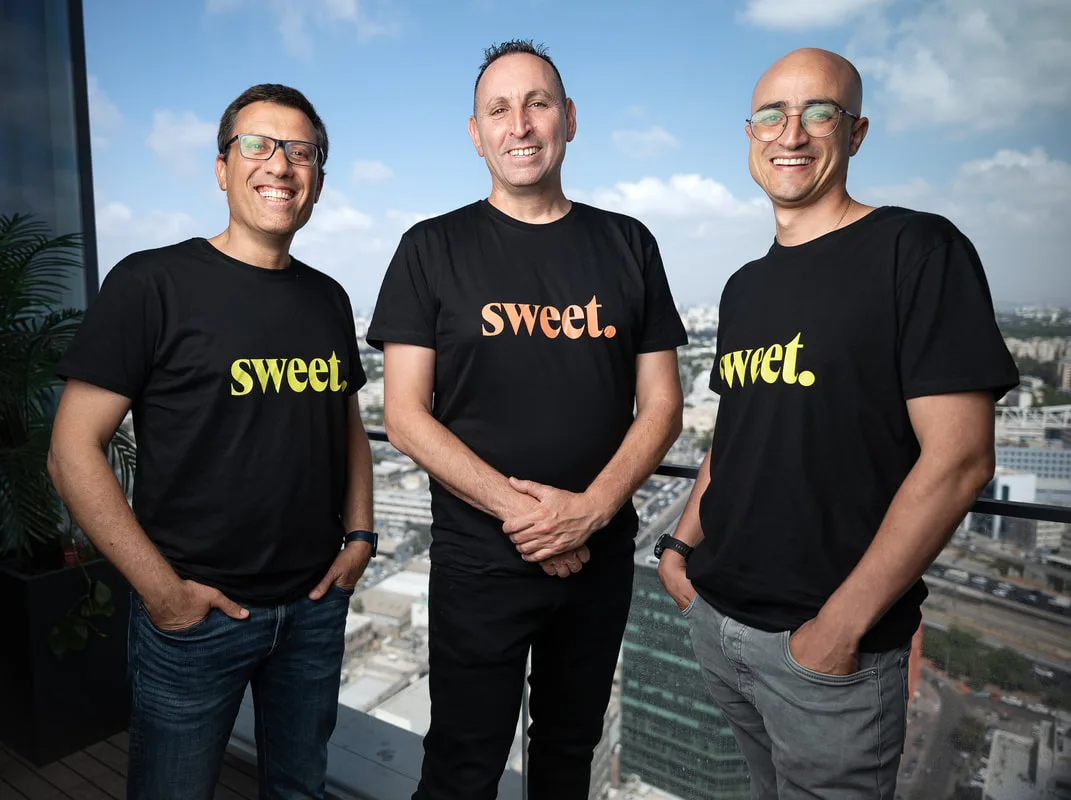
    Sweet Security Raises $75M in Series B. Pictured (left to right): Eyal Fisher, co-founder and CPO; Dror Kashti, co-founder and CEO; Orel Ben Ishay, co-founder and VP R&D.

    TEL AVIV, Israel -- (BUSINESS WIRE)-- Sweet Security, a leader in Runtime CNAPP and AI security solutions, today announced it has raised $75 million in Series B funding led by Evolution Equity Partners, with participation from Munich Re Ventures, Glilot Capital Partners, and Key1 Capital, bringing the company’s total funding to $120 million. The investment will accelerate global expansion and product innovation to meet fast growing enterprise demand for real-time protection across the entire cloud, AI systems, and production environments. Sweet also introduced new AI security capabilities that secure models, agents, and the full AI lifecycle, further strengthening its leadership in the emerging Runtime CNAPP and AI security market.

    ​As the CNAPP market shifts toward runtime-first protection, Sweet has emerged as the preferred platform among global enterprises, displacing incumbent vendors and redefining how organizations secure production environments. The funding follows a year of hypergrowth for Sweet, marked by a sixfold increase in ARR and a tenfold rise in enterprise customers, including multiple Fortune 1000 organizations. The company’s leadership is reinforced by a newly granted U.S. patent, covering features like training an LLM to identify anomalous log sessions – dramatically reducing noise and exposing complex, multi-step attacks that traditional rule-based systems miss.

    ​“Sweet Security stands out in one of the most competitive segments of cybersecurity,” said Richard Seewald, Founder and Managing Partner at Evolution Equity Partners. “The company’s ability to combine real-time cloud protection with AI-powered intelligence is unlike anything else in the market – redefining how enterprises secure the modern cloud and go about securing their AI environments.”

    Redefining the CNAPP Market While Pioneering the AI Security Market
    As agentic AI becomes more prominent in organization workflows and gains access to business critical data sources, it brings with it a host of new risks – from lacking even simple visibility through intricate vulnerabilities and emerging kinds of attacks, not found in traditional microservices.

    To solve this gap, Sweet offers an AI Security Platform (AISP), which gives AI teams the ability to discover every model and agent, understand how they interact, and identify misconfigurations or over-permissioned access before they create risk. Building on its runtime-powered cloud protection, Sweet now brings the same comprehensive insight and control to AI environments:
    • Map all AI agents, LLM servers and services using AI to expose shadow AI, understand what your agents do and assess exposure and risk
    • Detect and stop adversarial attacks agents such as prompt injection through AI-DR
    • Analyze agent behavior in real time, flagging abnormal activity and blocking disallowed actions
    • Assess the posture of your AI infrastructure and suggest ways to harden it; enforce guardrails on your agents without impacting development velocity

    The result is organizations where AI teams can build, deploy, and operationalize AI systems that are both high-performing and resilient by design.

    “No one else approaches runtime cloud and AI protection the way we do,” said Dror Kashti, co-founder and CEO of Sweet Security. “Cloud attacks no longer follow predictable patterns - they evolve dynamically, just like the AI systems enterprises are now building. Protecting those environments demands real-time understanding of how models, agents, and workloads behave - not static snapshots of configurations.”

    “Sweet Security has built a leading runtime cloud security offering, extending robust protection across cloud, data, workloads, and AI,” said James Berthoty, Latio Tech. “This enables teams to secure both traditional and AI applications running in the cloud."

    About Sweet Security
    Sweet Security is redefining enterprise cloud protection. As the leading provider of Runtime CNAPP solutions and a pioneer in AI Security, Sweet unifies runtime context with advanced AI intelligence to protect the modern enterprise across applications, workloads, and infrastructure. Its platform delivers real-time detection and response, vulnerability and posture management, identity threat protection, and API security – powered by its patented, LLM-driven detection engine, reducing alert noise to just 0.04%. By bridging cloud and AI security, Sweet enables organizations to accelerate innovation, reduce operational risk, and achieve industry-leading MTTR times.
    Sweet Security was founded by Dror Kashti, CEO, Eyal Fisher, CPO, and Orel Ben Ishay VP R&D. Privately funded, Sweet is backed by Evolution Equity Partners, Munich Re Ventures, Glilot Capital Partners, CyberArk Ventures, and an elite group of angel investors. For more information, users can visit sweet.security.


    Contacts
    Media Contact
    Shiri Glazer
    Sweet Security
    shiri.glazer@sweet.security
    Picture
  • Published on

    Agentio Raises $40M in Series B Funding

    Picture
    Agentio, a NYC-based provider of an AI-native platform for creator-led advertising, raised $40M in Series B funding.

    Forerunner led the round with participation from Benchmark, Craft Ventures, AlleyCorp, Antler, and Starting Line.

    The company intends to use the funds to advance its AI infrastructure, expand creator content buys beyond YouTube to Meta Partnership Ads and additional platforms, and grow its team from 35 to over 100 employees in 2026.

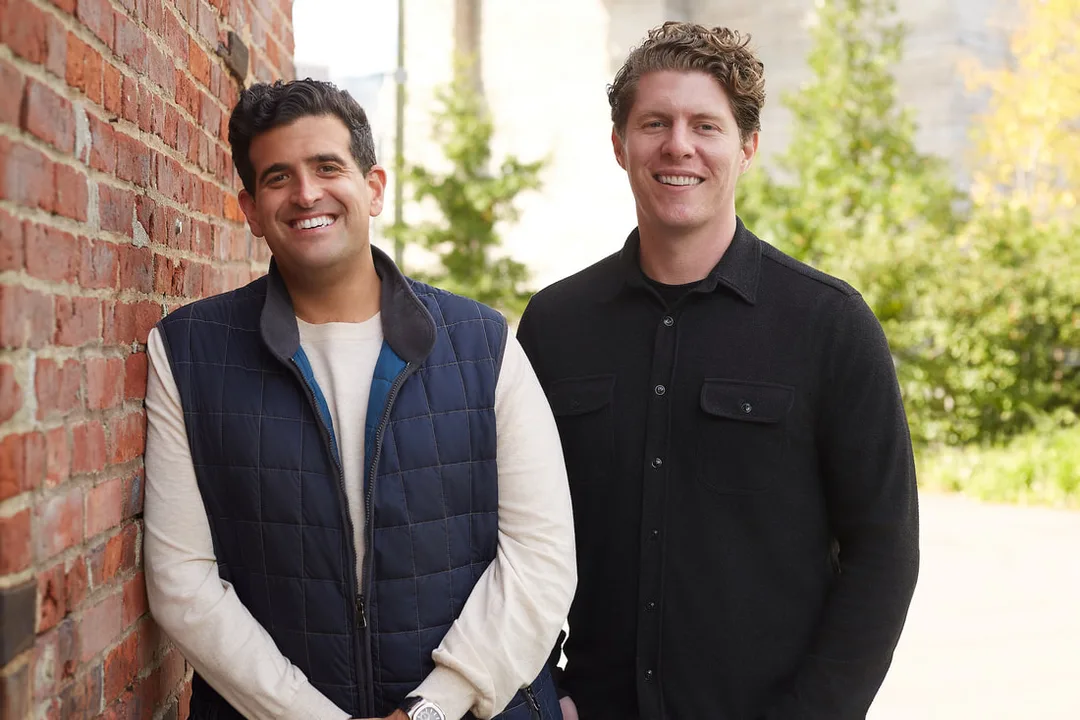
    Led by CEO Arthur Leopold, and CTO Jonathan Meyers, Agentio provides an AI platform that operates as a two-sided network connecting brands and creators. It enables a) brands to get agentic tooling to build, automate, and scale their creator programs, and b) creators to get personalized opportunities from brands without negotiation.

    Companies, including Warby Parker, Away, Chime, and The Farmer’s Dog, used Agentio’s platform for the creator programs.

    The raise brought the total amount to $56M and valued the company at $340M.

    source[FinSMEs]
  • Published on

    OutcomesAI, founded by Kuldeep Singh Rajput, raises $10M in Seed Financing

    Picture
    OutcomesAI, a Boston, MA-based healthcare company building a new model of scalable nursing, raised $10m in seed financing.

    ​​The round was led by Santé Ventures. As part of the financing, Joe Cunningham, M.D., Founding Managing Director of Santé Ventures; Linda Finkel, Senior Advisor, AVIA; Dennis McWilliams, Managing Director at Santé Ventures; and Kevin White, Ph.D., Co-founder of Tempus AI, will join the Board of Directors, alongside Founder and CEO Kuldeep Singh Rajput.

    The company intends to use the funds to accelerate its commercial rollout, launch dedicated nursing service lines, and scale enterprise partnerships across health systems, virtual care providers, and pharma.
    OutcomesAI combines AI voice agents with licensed nurses to extend nursing capacity, reduce costs, and give patients access to care. Glia®, its AI engine purpose-built for nursing, combines AI voice agents that manage inbound and outbound patient calls with licensed OutcomesAI nurses delivering services like triage, virtual care, post-acute follow-up, and patient support programs. Voice agents capture symptoms, schedule visits, coordinate follow-ups, and provide education — all in multiple languages — while nurses are supported by AI productivity tools like real-time scribing and protocol guidance.

    In 2024, the company launched the OutcomesAI Collaboratory, bringing together five health systems and virtual care companies to validate Glia’s safety, accuracy, and clinical performance. Building on these results, OutcomesAI will publish real-world case studies demonstrating measurable ROI — including early findings where Glia reduced nurse workload by hundreds of hours per month while doubling patient-to-nurse ratios.

    source; FinSMEs
  • Published on

    Planera, cofounded by Nitin Bhandari, Raises $8M in New Funding from Sorenson Capital, Sierra Ventures, and other investors

    Picture
    Planera, San Jose, CA-based visual collaborative scheduling for construction company, raised $8M in new funding.

    Backers were Sorenson Capital, Sierra Ventures, Prudence, and Brick and Mortar Ventures, Zachry Construction Corporation, and other construction industry executives.

    The company intends to use the funds to expand adoption among contractors and subcontractors building new data center projects.

    Led by CEO Nitin Bhandari, Planera is a provider of visual, CPM-based construction scheduling solutions that improve project planning and management. It has established a dedicated service team with data center knowledge to support its customers in the segment. The company has also developed new AI tools to help these customers to identify potential project delays early and find opportunities to accelerate their project schedules.

    It is used by industry leaders including Balfour Beatty, Barton Malow, Big-D Construction, HITT Contracting, Ryan Companies, Skanska, and Zachry Construction.

    The raise, which followed its Series A in 2024, brought total funding to $26.5M.

    source; FinSMEs